In this post I reveal real driver of obesity and ways to effectively lose weight.
In this post I reveal real driver of obesity and ways to effectively lose weight.
In this post I reveal real driver of obesity and ways to effectively lose weight.
Maintaining a healthy weight has quickly become one of the most difficult health challenges people face today, pushing obesity to an all time high with no sign of improvement.
But many who try to lose weight seem to fail over and over again, and are pushed towards weight loss drugs like Ozempic and Wegovy. But as many of us know, these are neither safe nor effective longterm.
So why is it so hard to lose weight naturally? Well, I think it’s because we have the completely wrong ideas about what makes us fat and how to best reverse it.
We’ve all been told gaining weight is a result of eating too much and not moving enough. But as I’ll explain in this article, there is much more to it than that.
In the past, excess adipose tissue (body fat) served a useful role as a food reserve during times of famine. However in recent times, I believe our fat storage mechanisms have changed.
In this article, I’ll explain what I think is the biggest driver of our obesity epidemic and why it’s so difficult for people to lose weight. I’ll then share effective ways to address this problem and help you achieve lasting and healthy weight loss.
My name is Austin Higgs, this is The Art of Optimal Living, where I expose health and medical dogma, and help you naturally optimize your health. As always, this is for educational purposes only and does not constitute medical advice.
The standard weight loss advice that we all hear constantly is to eat less and move more. The majority of weight loss influencers and even doctors spam the “calories in, calories out” narrative. They blame obesity on eating too much while not burning enough calories. But this is very clearly not the case.
Some estimations actually show that overall levels of “calories”, or food consumption, have stayed the same or even declined during the same timeframe the increase in obesity has taken place.
This study investigated the food consumption patterns and per capita calorie intakes of populations of China and found a decrease in total energy intake.
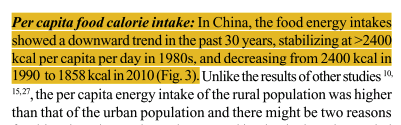
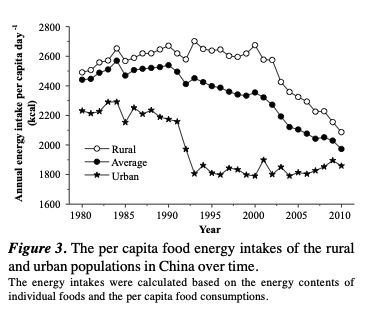
Granted, total food intake is difficult to track so it’s often estimated based off total food available. This is likely what leads to the conflicting results, as many studies report an increase in food consumption. However, I think it’s safe to say that our “calories” intake, or food consumption, has definitely not increased enough to cause the striking spike in obesity.
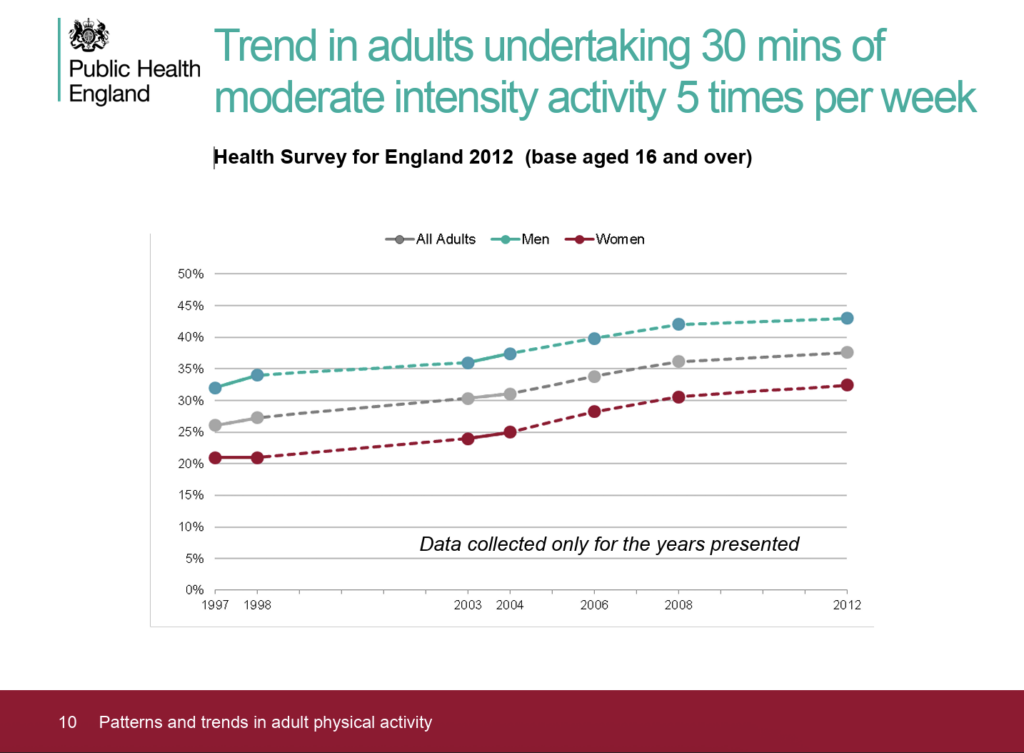
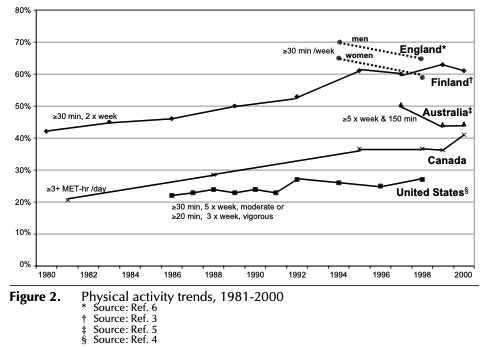
It appears too that a lack of physical activity can’t explain the high incidence of obesity either. It’s often said our transition from labor intensive to stagnant office jobs has significantly decreased our populations physical activity and has contributed to our weight gain. Yet the data actually show an increase in physical activity over the last several decades.
This 2012 Health Survey for England showed an increase in activity in adults from 1997 to 2012.
This Canadian study found that “Physical activity increased significantly among Canadian adults in the 1980s and 1990s.”
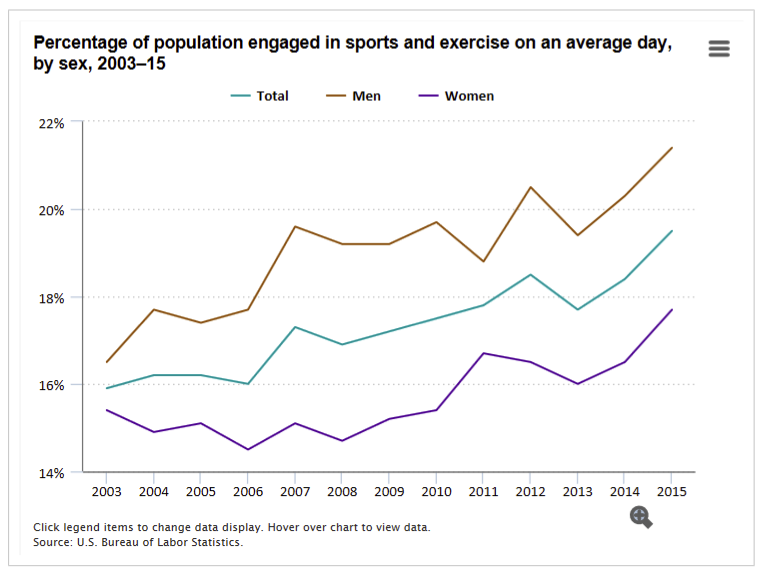
This data pulled from American Time Use Survey (ATUS) data shows an increase in sports and exercise from 2003 to 2015.
Another scapegoat used to explain our obesity problem is genetics. Many attribute obesity to bad genetics, and offer harmful pharmaceuticals as the only solution. Obviously, this just absurd. First off, genetics are not what you think they are and definitely don’t control you. Genes are fictitious computer generated sequences of letters that have no impact on our health or physiology.
But even if the genetics theory were true, the observed increase in obesity has happened too quickly for a gene pool shift to explain it. So we have to look elsewhere…
Historically, adipose tissue served to our advantage. Humans relied on excess fat as food reserves for periods of famine. However, I believe our weight gain and fat storage mechanisms have completely changed in the last few decades, and now serve a more protective role.
It’s not calories, inactivity, or genes that have caused our massive spike in obesity – it’s toxins. The specific toxins I’m interested in covering here are called persistent organic pollutants (POPs). These are commonly called obesogens in obesity research, since they seem to be the most problematic for fat gain.
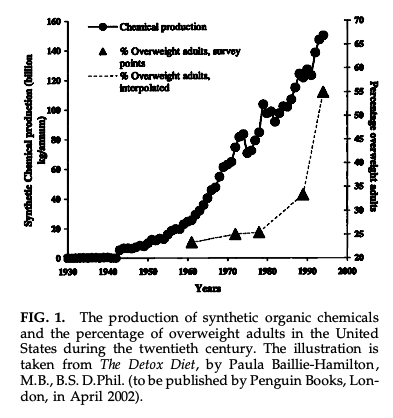
As you can see below, levels of these synthetic chemicals has increased over the same time period that obesity has, with a delayed effect. Granted, this is associational so we can’t make conclusions from this, but it’s still important to consider.
Most POPs were banned years ago, but due to their high resistance to biodegradation, they persist in our environment and food. These chemicals are lipophilic (fat loving), so they accumulate in human and animal fat tissue and biomagnify up the food chain.
In fact, they are so abundant in our environment, authors of this paper (pg. 20) said they could not find adequate controls with zero POPs in their bodies.
There are many class of POPs, a few popular ones you may of heard of include PCBs, PBBs, Dioxins, DDT, DDE, HCB, and BPA. But unfortunately there are plenty more.
Due to the lipophilic nature of these chemicals and widespread use, we are exposed to them EVERYWHERE. We are exposed from our food, water, and air; they’ve got us from all angles.
These chemicals are in pesticides and herbicides, non organic produce, concentrated in animal fat, food preservatives, food coloring, other food additives, seed oils, cookware, flame retardants, synthetic clothing, personal hygiene and beauty products, perfume, air pollution, prescribed and over the counter pharmaceuticals, and even furniture. They’ve even been found in utero and breast milk, which exposes our most vulnerable population.
POPs are thought to cause weight gain through several mechanisms. Though I think the most logical, proposed in this article, is as a protective mechanism.
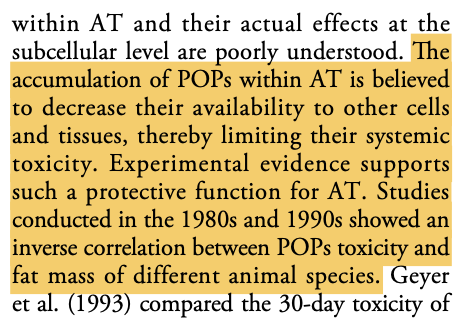
Storing these toxic chemicals in adipose tissue protects other vital organs from exposure and damage.
But these toxins can also lead to weight gain by affecting our metabolic health. POPs have been shown to disrupt weight controlling hormones and effect insulin sensitivity. However, these “disruptions” could be the intelligent response by the body to turn on fat gain in order to safely store the toxins.
There is plenty of evidence that demonstrates the obesogenic effect of POPs, including mechanistic, associational, and experimental. I obviously can’t cover it all, but I’ll discuss a few interesting points.
First of all, we know we store POPs in fat tissue, which is shown simply by taking biopsies of adipose tissue. This has been done in both animals and humans.
Fasting animals and humans losing weight show an increase in POP levels circulating the blood.
Many of these chemicals have been shown experimentally to induce obesity when given animals. This study found impressive weight inducing results of a pesticide.
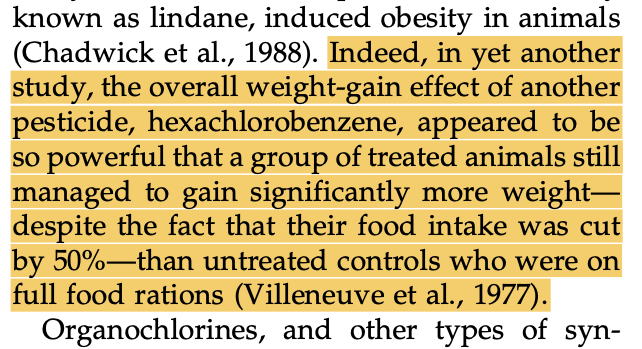
We know many pharmaceuticals, which are loaded with toxins like POPs, cause weight gain.
The weight causing effects of POPs have even been taken advantage of by agricultural companies to promote animal fat gain.
Again, there is loads of evidence that show POPs lead to fat gain, and it’s very easy to find.
We know obesity increases our risk of all major chronic diseases. But excess adipose tissue isn’t necessarily harmful in and of itself. However, fat tissue is correlated with these lipophilic toxins, the more fat someone has the more stored toxins they hold. I believe this is the primary reason obesity is so dangerous.
When fat tissue reaches its toxic storage capacity, further exposure stays in the bloodstream then accumulates in various other organs. Additionally, during any period of fat loss (lipolysis), toxins from broken down fat will leak into the bloodstream. The more rapid the weight loss, the more circulating toxins you’ll have. This can lead to a cleansing reaction, when the liver and detox systems get overworked and circulating toxins cause symptoms which range from mild to dangerous.
Starting fasting and ketogenic diets are often associated with headaches, fatigue, muscle cramps, and more. These symptoms, known as “keto flu”, are thought to be poor electrolyte balance, dehydration, and/or carb withdrawal. However, I think these are classic instances of cleansing reactions.
This is why weight loss attempts should always be accompanied by detox and toxic removal support, which I’ll discuss more in detail later on.
To summarize so far, these lipophilic toxins called POPs are everywhere in our modern environment, bioaccumulate in fat tissue, and are very resistant to degradation. Exposure to POPs induces fat gain as a protective mechanism (safe storage). Inevitably making any individual affected vulnerable to leaking toxins and cleansing reactions during weight loss. In more severe cases, excess circulating toxins can lead to damage of vital organs and increased chronic disease risk. We have strong correlative, mechanistic, and experimental data to support this. So now that we know the main driver of obesity the important questions is: How can we remedy this problem and safely lose weight?
An effective solution to this problem is crucial. Not only will it help us lose fat, feel and look good, but it’ll reduce our exposure to toxic chemicals therefore drastically improve our overall health and reduce our risk of chronic diseases.
The remedy is straightforward and simple. We want to,
It’s likely that our biggest exposure to these toxins comes from our food, making it absolutely paramount to eat clean. I recommend eliminating all seed oils, processed foods, and non organic fruits and vegetables. It’s best to eat organic, pasture raised meats and poultry and wild caught seafood. My general motto is if it wasn’t available more than 100 years ago, avoid it.
Next, work to identify other ways you are exposed to these toxins. Beyond food, they can be found in clothing, personal hygiene and beauty products, perfume and cologne, indoor and outdoor air pollution, pharmaceuticals, water, food packaging, cookware, furniture, ect.
Switch to natural clothing materials (cotton, linen, wool, silk) and furniture, buy clean hygiene and beauty products, use an air purifier, swap cookware for stainless steel, cast iron, and ceramic, drink clean water, and don’t take pharmaceuticals. If you’re currently on a pharmaceutical and need help safely getting off it, here are a few good resources:
There are multiple effective approaches for detox, and I recommend incorporating several. Specific cleansing diets, natural healing solvents, and supportive elimination therapies are all ways you can encourage detox and elimination of lipophilic toxins.
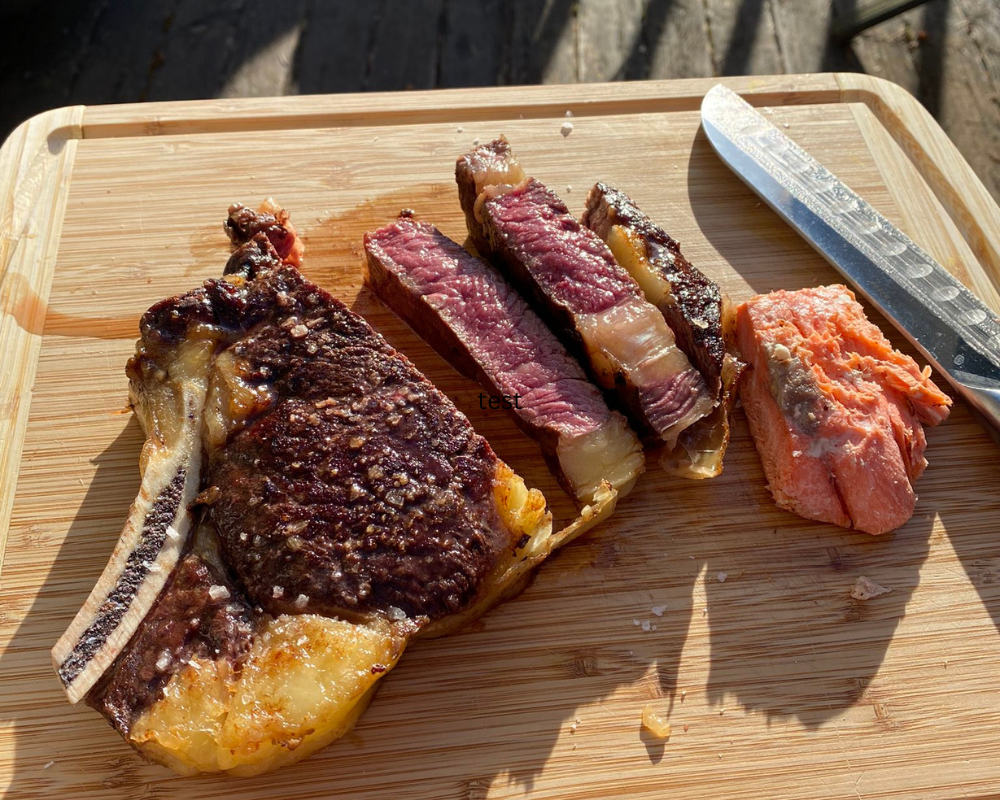
Any good cleansing diet will be a clean and natural elimination diet. The BBBE carnivore diet (beef, bacon, butter, and eggs) is great for cleansing. Grain–free whole foods plant-based diets are effective for short term cleansing, thought I wouldn’t recommend this diet for long. Though ketogenic and carnivore diets in particular are great for cleansing lipophilic toxins because they promote lipolysis (fat breakdown) and weight loss. This helps release the stored toxins into the blood for removal. Just remember, circulating toxins can be problematic if not removed rapidly, so it’s important to support the body’s elimination pathways, which I’ll discuss soon. In addition to a clean diet I recommend a trace mineral supplement, like fulvic/humic mineral supplement or Shilajit. Traditionally we get trace minerals from our food, but due to our modern agricultural techniques these nutrients have been almost completely removed.
Normally, the body is very good at detox and healing. But since the body is water-based it has a difficult time handling these lipophilic (fat loving) substances. To support the body we can use healing solvents, like castor oil, DMSO, turpentine, and several other essential oils, which work by dissolving lipophilic toxins out of various tissues so that the water-based body can remove them more easily. For more information on the power of these healing solvents, see the resources section below.
However, as I mentioned before, if too many lipophilic toxins are released and dissolved, the liver can get over worked, which leads to cleansing reactions. Again, symptoms associated with “keto flu” and fasting are likely cleansing reactions from an overworked liver after rapid fat breakdown and toxin release.
So as you begin a cleansing diet and healing solvent protocol, it’s important to start removal therapies and support the liver.
Water or coffee enemas are one of the best ways you can facilitate excess removal. Coffee enemas have the added benefit of supplying helpful compounds to improve liver function. Two other natural ways to stimulate bowel movements are castor oil and herbal laxatives, like senna and cascara. Binders are good at catching toxins released into the digestive tract. Personally, I use Zeolite Clinoptilolite, a natural volcanic rock, which has really solid evidence behind it. You can support the liver with milk thistle or NAC, both shown to be incredibly effective. For more information on elimination therapies and liver support, see the resources section below.
I understand this is a lot of information and different things to do, so if you’re new to natural healing and cleansing routines, definitely start slow and basic. Maybe begin with a small castor oil dose once per week, or trying a daily or weekly enema. As you get more comfortable with natural healing, you can try more advanced methods like a turpentine or DMSO protocol, which both have impressive anecdotal and scientific evidence to show efficacy.
Here are a few resources for information on these healing methods and effective cleansing protocols with proven tract records.
Obese people are blamed for being lazy and having no will power, but I think this is horrible. It’s not a lack of will power. People are constantly being poisoned, then fed the wrong information about how to fix the problem. The body is simply doing its best to help heal and protect us. Even with all the willpower in the world without the right information people are doomed to fail. Following conventional health and wellness advice will set you up for failure from the jump.
At the end of the day, the standard weight loss story just isn’t cutting it. It’s a harmful scapegoat continually pushing down those who are struggling, without offering truly effective and safe tools.
With all that being said, can eating less and moving more lead to weight loss? Absolutely it can, almost every time. But is it optimal? No shot.
I think strict calorie cutting is a really bad idea for most obese people, who are likely consuming a lot of processed food and already nutrient deprived. This method will push them even deeper into nutrient deficiencies and typically leads to weight gain rebounding. Without addressing the true cause, sustained and healthy weight loss is very difficult.
Our bodies are incredibly intelligent. When we are healthy and eating the right foods our hunger and satiety signals function very well. During proper cleansing and weight loss, you should be able to eat till you’re completely satiated and still lose weight.
Not only can thorough detox lead to lasting weight loss success, but it improves health across the board, without starvation and non-stop intense exercise.
We live in a toxic world and it’s time we realize the profound implications it has on our physiology and health.
Share